Olm
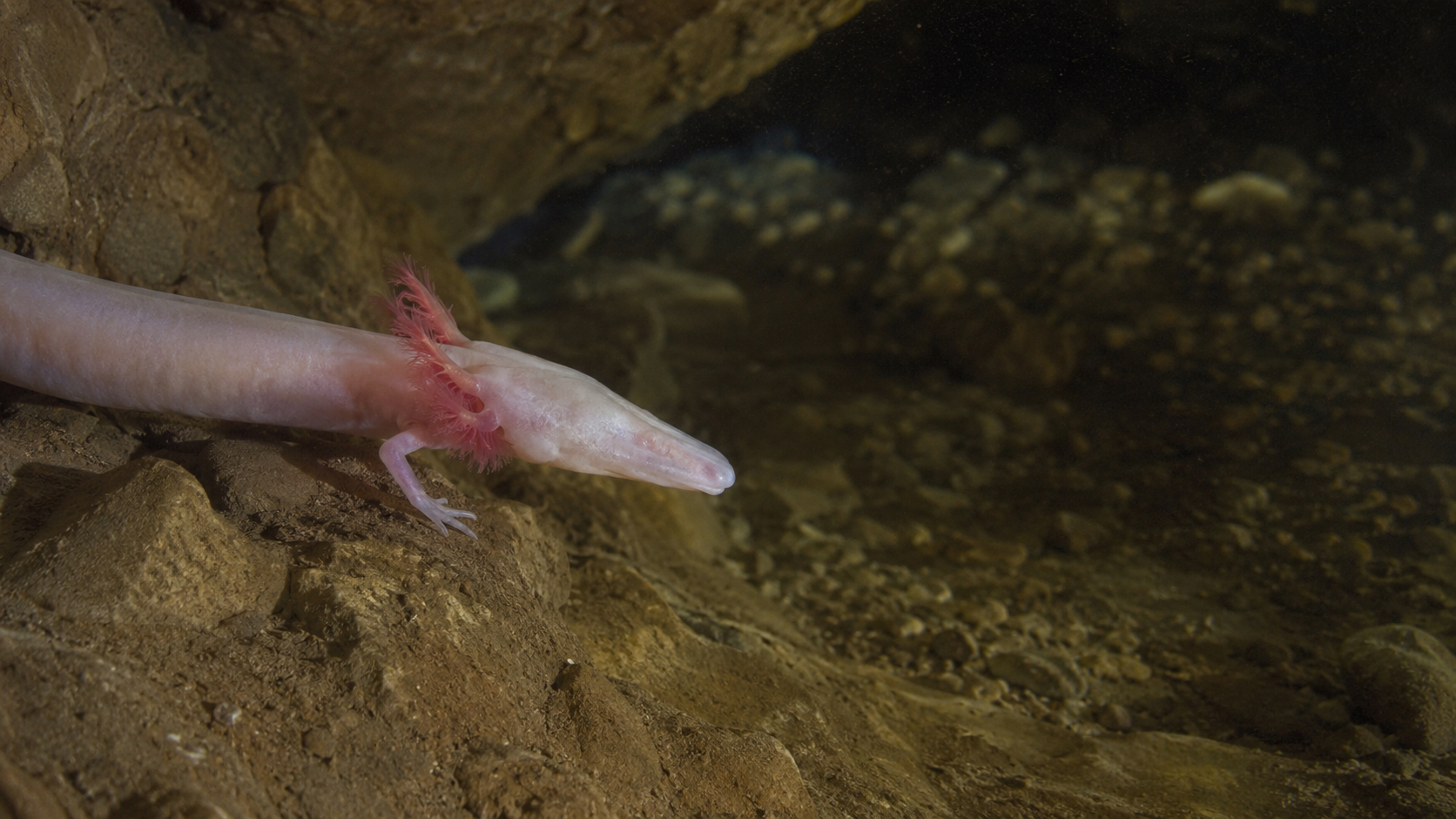
The Olm (Proteus anguinus) is a unique and fascinating amphibian species that inhabits the caves of Central and Southeastern Europe. It is also known as the ‘human fish’ due to its pinkish-white color and human-like body shape.
Natural History
Olm are found in the underground waters of the Dinaric Alps, a mountain range that stretches from Italy to Albania. They live in a variety of aquatic environments, including caves, springs, and underground rivers.
Olm are neotenic salamanders, meaning they retain their larval characteristics into adulthood. They have a slender body, typically between 20-30 cm in length, and a flattened head with small eyes. Their skin is smooth and pinkish-white, and they have three pairs of feathery gills that allow them to breathe underwater.
Conservation Status
The Olm is listed as Vulnerable on the IUCN Red List, due to a range of threats including habitat destruction, pollution, and climate change. The species is also protected by law in several countries, including Slovenia, Croatia, and Bosnia and Herzegovina.
Safety Precautions
While Olm are not typically aggressive, they can bite if handled carelessly. It is also important to note that the species is sensitive to light and should not be exposed to direct sunlight or bright artificial lighting.
Observation and Research
Olm are an important subject of scientific research, particularly in the fields of biology and ecology. They are also a popular species among cave explorers and enthusiasts, who can observe them in their natural habitat with the help of specialized guides and equipment.
| Scientific Name | Proteus anguinus |
|---|---|
| Family | Proteidae |
| Order | Caudata |
| Class | Amphibia |
| Conservation Status | Vulnerable |
Interesting Facts
Olm have a unique ability to regenerate their body parts, including their limbs and eyes. They are also able to survive for long periods without food, by slowing down their metabolism and living off their stored energy reserves.
FAQ
What is the average lifespan of an Olm?
The average lifespan of an Olm is around 10-15 years in the wild, although some individuals have been known to live up to 20 years in captivity.
What do Olm eat?
Olm are carnivorous, and feed on a variety of small aquatic animals including crustaceans, insects, and worms.
Can Olm be kept as pets?
No, Olm are not suitable as pets. They require specialized care and equipment, and are protected by law in several countries.
How can I help protect the Olm?
You can help protect the Olm by supporting conservation efforts, reducing your carbon footprint, and spreading awareness about the importance of protecting this unique species.
Please note that the information provided in this article is for educational purposes only, and should not be used as a substitute for professional veterinary advice. If you have any concerns about the health or well-being of an Olm, please consult a qualified veterinarian or conservation expert.
Life Cycle and Development
The Olm’s life cycle is a complex and fascinating process. They undergo a unique type of development, known as neoteny, where they retain their larval characteristics into adulthood. This means that they never undergo metamorphosis, unlike most other amphibians. As a result, they keep their gills and remain aquatic throughout their lives.
The Olm’s life cycle begins with eggs, which are typically laid in the spring or early summer. The female Olm lays her eggs in a protected location, such as a cave or under a rock, and they hatch after several weeks. The larvae that emerge are tiny, blind, and helpless, but they quickly develop and grow.
As they grow, the larvae begin to develop their feathery gills, which allow them to breathe underwater. They also start to develop their unique pinkish-white coloration and slender body shape. After several months, the larvae reach adulthood and are ready to start the cycle again.
Communication and Senses
Despite their primitive appearance, Olm have a range of complex senses that allow them to navigate and interact with their environment. They have poor eyesight, but they are highly sensitive to touch and vibrations in the water. They use their sensitive skin to detect the presence of other Olm and potential predators.
Olm also have a unique way of communicating with each other. They use a range of clicks, whistles, and body language to convey information and coordinate their behavior. For example, they will often use a specific type of click to signal aggression or courtship.
In addition to their senses and communication abilities, Olm also have a highly developed sense of spatial awareness. They are able to navigate complex underwater environments with ease, using a combination of visual and tactile cues to build a mental map of their surroundings.
Seasonal Variation and Ecological Relationships
Olm are adapted to life in the cold, dark waters of the Dinaric Alps. As a result, they have a range of specialized physiological and behavioral adaptations that allow them to survive in this environment.
During the winter months, Olm will often enter a state of dormancy, known as brumation, to conserve energy. They will slow down their metabolism and reduce their activity levels, surviving on stored fat reserves until the spring.
In the summer months, Olm are more active, and they will often emerge from their hiding places to forage for food. They feed on a range of aquatic invertebrates, including crustaceans, insects, and worms.
Olm also have a range of ecological relationships with other species in their environment. They are an important food source for larger predators, such as fish and otters, and they also play a key role in maintaining the balance of their ecosystem.
Research and Responsible Enrichment
Despite their fascinating biology and ecology, Olm are still poorly understood. Researchers are working to learn more about their behavior, physiology, and ecological relationships, and to develop effective conservation strategies.
One of the key challenges facing Olm conservation is the lack of suitable habitats. As a result, researchers are working to develop artificial habitats that can mimic the conditions found in their natural environment.
In addition to research, responsible enrichment is also an important aspect of Olm conservation. This involves providing Olm with stimulating and naturalistic environments that allow them to express their natural behavior.
For example, some zoos and aquariums are providing Olm with complex underwater environments that include rocks, plants, and other features. These environments allow the Olm to forage, hide, and interact with each other in a natural way.
Ethical and Legal Considerations
Olm are protected by law in several countries, including Slovenia, Croatia, and Bosnia and Herzegovina. As a result, there are strict regulations governing their capture, trade, and keeping in captivity.
In addition to legal considerations, there are also important ethical considerations to take into account. Olm are wild animals that have complex social and spatial needs, and they should be treated with respect and care.
As a result, it is essential to prioritize the welfare and well-being of Olm in any conservation or research efforts. This involves providing them with suitable habitats, minimizing stress and disturbance, and ensuring that they are treated with dignity and respect.
Habitat and Environmental Requirements
Olm are adapted to living in the unique environment of underground waters, where the temperature is stable and the water is rich in oxygen. They are found in a variety of aquatic habitats, including caves, springs, and underground rivers, where the water is typically calm and slow-moving. The species requires a specific set of environmental conditions to thrive, including a temperature range of 6-12°C, high humidity, and low levels of light.
In their natural habitat, Olm are often found in areas with a rocky substrate, where they can hide and shelter in crevices and under rocks. They are also found in areas with a high level of aquatic vegetation, such as algae and mosses, which provide them with food and shelter. The species is sensitive to changes in water quality and is often used as an indicator species to monitor the health of underground ecosystems.
Behavior and Social Structure
Olm are primarily solitary animals and only come together during the breeding season. They are nocturnal, spending most of their time hiding in dark crevices and under rocks, and emerging at night to forage for food. The species is carnivorous, feeding on a variety of small aquatic animals, including crustaceans, insects, and worms.
In the wild, Olm have been observed using a variety of behaviors to communicate with each other, including visual displays and chemical signals. They are able to detect vibrations in the water using their lateral line, a system of sensory organs that allow them to detect movement and changes in water pressure.
Captive Care and Breeding Programs
Olm are occasionally kept in captivity for research and conservation purposes, and are considered to be a challenging species to care for. They require a specialized aquarium with a stable temperature, high humidity, and low levels of light, and a diet of live foods such as brine shrimp and bloodworms.
Breeding programs for Olm are in place in several countries, including Slovenia and Croatia, where the species is listed as endangered. These programs aim to increase the population size and genetic diversity of the species, and to release captive-bred individuals back into the wild. However, breeding Olm in captivity is a complex and challenging process, and requires a high level of expertise and specialized facilities.
Threats and Management
Olm are threatened by a range of human activities, including habitat destruction, pollution, and climate change. The species is sensitive to changes in water quality and is often used as an indicator species to monitor the health of underground ecosystems.
To manage the threats facing Olm, conservation efforts are focused on protecting and restoring their habitats, reducing pollution, and addressing the impacts of climate change. This includes the creation of protected areas, such as national parks and nature reserves, and the implementation of measures to reduce pollution and protect water quality.
Education and Community Engagement
Education and community engagement are critical components of Olm conservation efforts. By raising awareness of the species and its habitat, conservationists can build support for conservation efforts and encourage local communities to take action to protect the species.
In Slovenia, for example, the Olm is considered a national symbol, and is celebrated in a variety of cultural and educational events. The species is also featured in educational programs and materials, such as school curricula and nature guides, to raise awareness and promote conservation.