Fossa
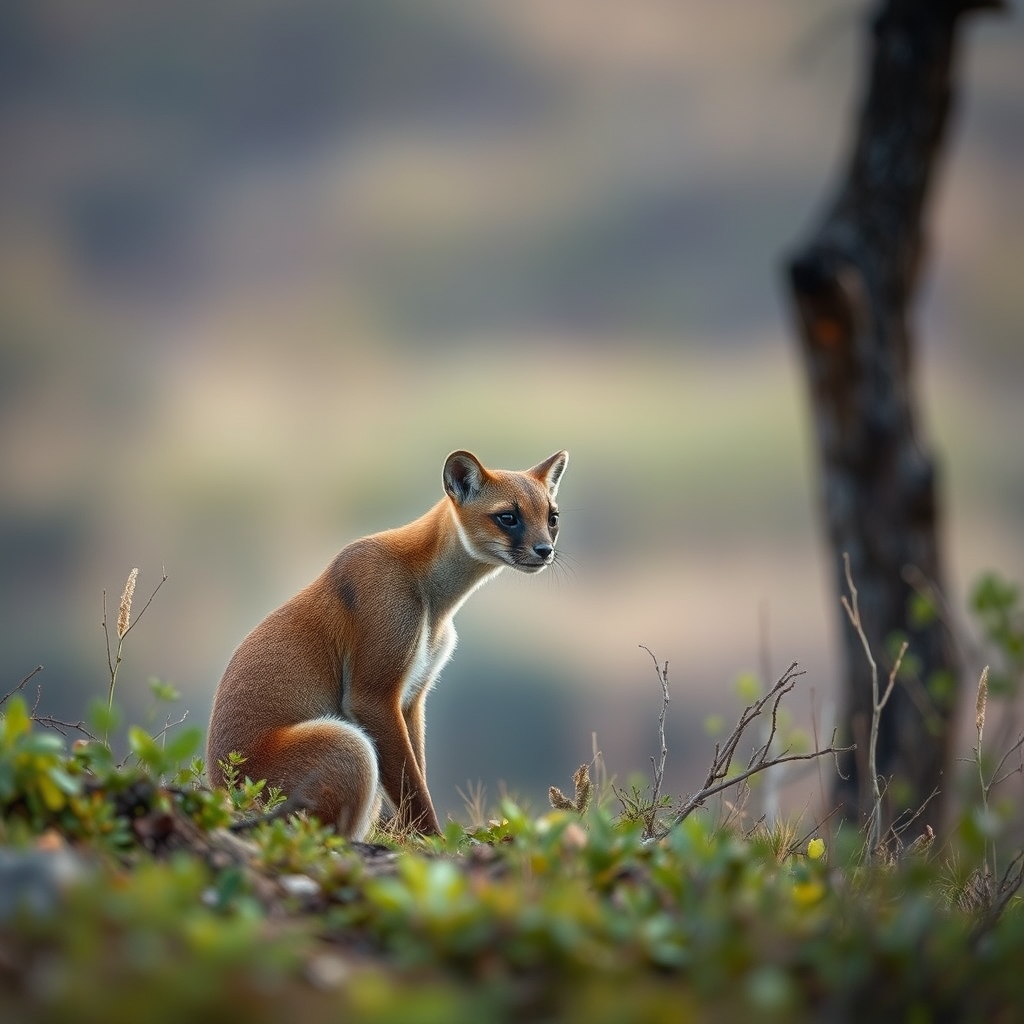
The fossa (Cryptoprocta spelea) is a carnivorous mammal endemic to Madagascar, and is the island’s top predator.
Natural History
Fossas are members of the Eupleridae family, which is closely related to the mongoose and meerkat families. They are known for their slender bodies, long tails, and powerful legs, which enable them to climb trees and pursue prey.
Physical Characteristics
Fossas have a distinctive appearance, with a reddish-brown coat, white underbelly, and a long, bushy tail. They have a relatively small head, with a short, broad snout and small ears. Adult fossas typically weigh between 6-12 kg (13-26 lbs) and measure 60-80 cm (24-32 in) in length, including their tail.
Habitat and Distribution
Fossas are found only in Madagascar, where they inhabit a variety of habitats, including forests, grasslands, and wetlands. They are widely distributed across the island, but are most commonly found in the western and central regions.
Diet and Hunting
Fossas are carnivores, and feed on a variety of prey, including lemurs, birds, reptiles, and amphibians. They are skilled hunters, using their speed, agility, and powerful jaws to catch their prey.
Conservation Status
The fossa is listed as Vulnerable on the IUCN Red List, due to habitat loss, fragmentation, and degradation, as well as persecution by local communities. Conservation efforts are underway to protect the fossa and its habitat, including the establishment of protected areas and education programs.
| Scientific Name | Common Name | Family | Conservation Status |
|---|---|---|---|
| Cryptoprocta spelea | Fossa | Eupleridae | Vulnerable |
Interesting Facts
Fossas are known for their unique communication system, which involves a variety of vocalizations, including barks, growls, and screams. They are also skilled climbers, and have been observed climbing trees in pursuit of prey.
Public Safety
While fossas are not typically aggressive towards humans, they are wild animals and should be treated with caution. If encountered in the wild, it is best to maintain a safe distance and not approach them.
Responsible Observation
If you are interested in observing fossas in their natural habitat, it is recommended to do so with a guided tour or through a reputable conservation organization. This will help ensure your safety and the well-being of the animals.
What is the average lifespan of a fossa?
The average lifespan of a fossa in the wild is approximately 12-15 years.
Are fossas endangered?
Fossas are listed as Vulnerable on the IUCN Red List, but are not currently considered endangered.
What is the typical diet of a fossa?
Fossas are carnivores and feed on a variety of prey, including lemurs, birds, reptiles, and amphibians.
Can fossas be found in captivity?
Yes, fossas can be found in some zoos and wildlife sanctuaries, but it is not common.
- IUCN Red List: Cryptoprocta spelea
- Madagascar National Parks: Fossa
- Wildlife Conservation Society: Fossa
Important Notice: If you are considering interacting with or caring for a fossa, please consult with a qualified veterinarian or wildlife expert to ensure the well-being and safety of both humans and animals.
Life Cycle
Fossas have a relatively long lifespan compared to other carnivorous mammals of similar size. They can live up to 12 years in the wild, although the average lifespan is around 8-10 years. In captivity, with proper care and management, they can live up to 15 years or more. Fossas breed throughout the year, but the peak breeding season is typically from September to November. After a gestation period of approximately 90 days, females give birth to 2-4 young, which are born blind and helpless. The female fossa cares for her young, nursing them and protecting them from predators, until they become independent at around 6-8 months old.
Communication and Senses
Fossas are primarily solitary animals and have a large home range, which they mark with scent and feces to communicate with other fossas. They also use vocalizations, such as a high-pitched scream, to communicate with other fossas, particularly during the breeding season. Fossas have excellent eyesight and hearing, which they use to detect prey and predators. They also have a keen sense of smell, which they use to track prey and mark their territory.
Seasonal Variation
Fossas are adapted to the seasonal changes in Madagascar, where the climate varies from hot and dry to cool and wet. During the dry season, fossas tend to be more active at night, resting in shaded areas during the day to avoid the heat. During the wet season, they are more active during the day, taking advantage of the abundant food sources. Fossas also adjust their diet according to the season, feeding on more fruit and vegetation during the wet season when other prey is scarce.
Ecological Relationships
Fossas play a crucial role in maintaining the balance of the ecosystem in Madagascar. As apex predators, they regulate the populations of their prey species, such as lemurs and birds, which in turn maintain the forest structure and composition. Fossas also compete with other predators, such as birds of prey and snakes, for food and resources. In addition, fossas are important seed dispersers and nutrient vectors, helping to maintain the diversity of plant species in the forest.
Research
Fossas are still poorly understood, and research is ongoing to study their behavior, ecology, and conservation. Scientists are using camera traps, GPS collars, and genetic analysis to study fossa behavior, habitat use, and population dynamics. Research is also focused on understanding the impact of habitat loss, fragmentation, and climate change on fossa populations.
Responsible Enrichment
In captivity, fossas require a lot of space and stimulation to thrive. They need large enclosures with plenty of vertical space to climb and jump, as well as a varied and nutritious diet. Fossas also require enrichment activities, such as puzzle feeders and scent marking, to stimulate their natural behavior. In addition, fossas require regular veterinary care and monitoring to ensure their health and well-being.
Ethical and Legal Considerations
Fossas are protected by law in Madagascar, and hunting or capturing them is strictly prohibited. The export of fossas is also regulated by international law, and only a few zoos and sanctuaries are licensed to keep them in captivity. In addition, fossas are considered a priority species for conservation, and efforts are being made to protect their habitat and reduce human-fossa conflict.
Threats and Conflicts
The fossa faces several threats to its survival, including habitat loss and fragmentation, human persecution, and climate change. The destruction and degradation of Madagascar’s natural habitats, primarily due to agriculture, logging, and charcoal production, have reduced the fossa’s habitat and prey base. As a result, fossas are often forced to venture into agricultural areas and villages in search of food, leading to conflicts with humans.
In some areas, fossas are viewed as pests and are persecuted by local communities, who may see them as a threat to their livestock and crops. This persecution can take the form of poisoning, trapping, or shooting. Additionally, fossas are sometimes caught accidentally in traps set for other animals, such as lemurs and birds.
Climate change also poses a significant threat to the fossa’s survival. Rising temperatures and changing rainfall patterns are altering the availability of food resources, making it harder for fossas to survive. Furthermore, climate change is also affecting the distribution and abundance of the fossa’s prey species, making it harder for them to adapt.
Captive Breeding and Reintroduction Programs
To help conserve the fossa, several captive breeding programs have been established in zoos and wildlife sanctuaries. These programs aim to breed fossas in a controlled environment, with the ultimate goal of releasing offspring back into the wild. However, the success of these programs is limited by the challenges of replicating the fossa’s complex social behavior and habitat requirements in captivity.
Reintroduction programs are also underway, with the goal of releasing captive-bred fossas into areas where the species has become extinct or is no longer found. However, these programs are often hampered by the lack of suitable habitat and the presence of human-fossa conflicts.
Community-Based Conservation
Community-based conservation initiatives are being implemented to address the human-fossa conflict and promote coexistence between humans and fossas. These initiatives involve working with local communities to develop strategies for mitigating conflicts, such as using guard animals to protect livestock and providing alternative livelihoods for communities that previously relied on hunting and trapping.
Education and outreach programs are also being implemented to raise awareness about the importance of conserving the fossa and its habitat. By engaging local communities in fossa conservation, it is hoped that attitudes towards the species will change, and fossas will be viewed as a valuable and important part of Madagascar’s unique biodiversity.
Ecotourism and Economic Benefits
Fossa-based ecotourism is also being promoted as a way to support conservation efforts and provide economic benefits to local communities. By offering guided tours and wildlife viewing opportunities, ecotourism can generate income and create jobs for local people, while also promoting the value of conserving the fossa and its habitat.
However, ecotourism must be carefully managed to avoid disrupting the fossa’s behavior and habitat. Responsible tourism practices, such as keeping a safe distance from fossas and not feeding them, are essential to minimizing the impact of tourism on the species.
Future Research Directions
Further research is needed to better understand the fossa’s ecology, behavior, and conservation needs. Studies on the fossa’s diet, habitat use, and social behavior are essential for developing effective conservation strategies. Additionally, research on the impacts of climate change and human-fossa conflict on fossa populations is critical for predicting the species’ future prospects.
By addressing these knowledge gaps, conservationists can develop targeted and effective conservation strategies to protect the fossa and its habitat, ensuring the long-term survival of this unique and fascinating species.