Introduction
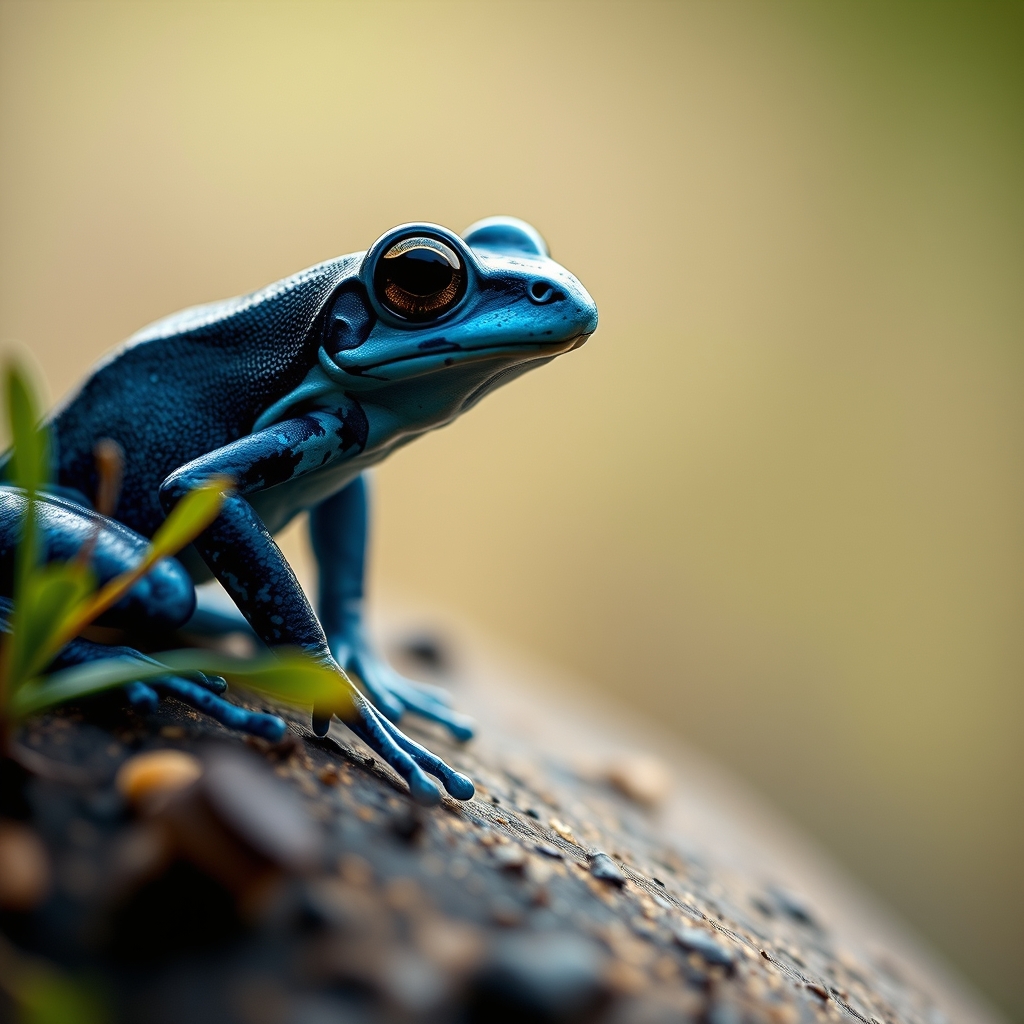
The Blue Dart Frog, also known as the Blue Poison Dart Frog, is a vibrant and fascinating amphibian native to the tropical regions of Central and South America. This tiny, yet striking creature has gained popularity among frog enthusiasts and scientists alike due to its unique appearance and intriguing behavior.
Quick Reference Table
| Scientific Name | Dendrobates azureus |
|---|---|
| Family | Dendrobatidae |
| Native Habitat | Tropical rainforests of Central and South America |
| Diet | Small insects and invertebrates |
| Conservation Status | Least Concern (IUCN) |
Taxonomy and Identification
The Blue Dart Frog belongs to the family Dendrobatidae and is scientifically known as Dendrobates azureus. It is a member of the poison dart frog family, which is characterized by their bright colors and toxic secretions. The Blue Dart Frog is one of the most recognizable species due to its vibrant blue coloration, which serves as a warning to potential predators.
Natural Habitat and Distribution
The Blue Dart Frog is native to the tropical rainforests of Central and South America, specifically in countries such as Costa Rica, Panama, and Colombia. They inhabit the forest floor, where they can be found in areas with high humidity and temperatures between 75°F and 85°F (24°C and 30°C).
Behaviour
Blue Dart Frogs are diurnal and spend most of their time on the forest floor, where they hunt for small insects and invertebrates. They are known to be territorial and will defend their territory from other Blue Dart Frogs. During the breeding season, males will engage in a complex courtship ritual to attract females.
Diet
Blue Dart Frogs are carnivorous and feed on small insects and invertebrates, such as ants, beetles, and spiders. They have a sticky tongue that they use to catch their prey, and their diet plays an essential role in maintaining the balance of their ecosystem.
Daily Needs
Blue Dart Frogs require a specific set of conditions to thrive in captivity. They need a well-ventilated, secure enclosure with a temperature range of 75°F to 85°F (24°C to 30°C) and humidity levels between 60% and 80%. A shallow water dish is essential for drinking and soaking, and a substrate such as sphagnum moss or coconut fiber can help maintain humidity.
A photoperiod of 10-12 hours of light and 12-14 hours of darkness is recommended, and a low-wattage light bulb or LED light can be used to maintain a temperature gradient. It is also crucial to provide hiding places, such as plants or rocks, to help reduce stress.
Warning Signs
Blue Dart Frogs can be prone to certain health issues, such as metabolic bone disease, respiratory infections, and skin problems. It is essential to monitor their behavior and physical condition regularly, looking for signs of illness or stress, such as lethargy, loss of appetite, or changes in skin coloration.
If you notice any unusual behavior or physical changes, it is crucial to consult a qualified veterinarian experienced in amphibian care. They can provide a proper diagnosis and recommend the best course of treatment.
Responsible Care or Conservation
Blue Dart Frogs are popular among frog enthusiasts, but it is essential to prioritize their welfare and conservation. In the wild, they are threatened by habitat destruction, pollution, and the pet trade. As a responsible frog owner, you can help support conservation efforts by choosing captive-bred individuals and supporting reputable breeders.
In addition, you can contribute to conservation efforts by supporting organizations that work to protect and restore their natural habitats. By taking these steps, you can help ensure the long-term survival of this incredible species.
Practical Takeaways
- Provide a well-ventilated, secure enclosure with a temperature range of 75°F to 85°F (24°C to 30°C) and humidity levels between 60% and 80%.
- Offer a varied diet of small insects and invertebrates.
- Monitor their behavior and physical condition regularly, looking for signs of illness or stress.
- Consult a qualified veterinarian experienced in amphibian care if you notice any unusual behavior or physical changes.
- Support conservation efforts by choosing captive-bred individuals and supporting reputable breeders.
What is the average lifespan of a Blue Dart Frog?
The average lifespan of a Blue Dart Frog is around 10-15 years in captivity.
Can I handle my Blue Dart Frog?
No, it is not recommended to handle Blue Dart Frogs, as their skin secretions can be toxic to humans.
How often should I feed my Blue Dart Frog?
Blue Dart Frogs should be fed 2-3 times a week, depending on their age, size, and activity level.
Can I keep multiple Blue Dart Frogs together?
No, it is not recommended to keep multiple Blue Dart Frogs together, as they can be territorial and may fight.
What is the best substrate for a Blue Dart Frog enclosure?
A substrate such as sphagnum moss or coconut fiber is recommended, as it can help maintain humidity and provide a comfortable environment for the frog.
- National Geographic: Blue Poison Dart Frog
- Smithsonian’s National Zoo & Conservation Biology Institute: Blue Dart Frog
- International Union for Conservation of Nature (IUCN): Dendrobates azureus
Important Notice: If you suspect that your Blue Dart Frog is ill or injured, please consult a qualified veterinarian experienced in amphibian care. They can provide a proper diagnosis and recommend the best course of treatment. Never attempt to diagnose or treat your frog without proper veterinary care, as this can lead to further harm or even death.
Life Cycle and Development
The Blue Dart Frog’s life cycle is a complex and fascinating process that involves several stages of development. The female frog lays her eggs on a leaf or a branch, usually in a humid and shaded area. The eggs hatch into tadpoles after about two weeks, and the tadpoles go through a series of molts as they grow and develop. During this stage, they are carnivorous and feed on small invertebrates and algae.
As the tadpoles grow, they begin to develop their limbs and lose their gills. After about six to eight weeks, they undergo metamorphosis and transform into young frogs. The young frogs, also known as juveniles, are small and vulnerable, but they quickly grow and develop their bright blue coloration.
The Blue Dart Frog’s life cycle is influenced by environmental factors such as temperature, humidity, and food availability. In the wild, they can live up to five years, although their average lifespan is around two to three years. In captivity, with proper care and management, they can live up to seven years or more.
Communication and Senses
The Blue Dart Frog has a unique way of communicating with other frogs through a series of calls and vocalizations. They use a high-pitched chirping sound to attract mates and defend their territory. They also use visual cues such as body language and posturing to communicate with other frogs.
The Blue Dart Frog has a highly developed sense of vision and can see in multiple directions at once. They have large, round eyes that are sensitive to movement and can detect even the slightest changes in their surroundings. They also have a keen sense of hearing and can detect the calls of other frogs from a distance.
In addition to their visual and auditory senses, the Blue Dart Frog also has a highly developed sense of smell. They use their sense of smell to detect food and predators, and they can even detect the scent of other frogs.
Seasonal Variation
The Blue Dart Frog’s behavior and physiology change with the seasons. During the wet season, they are more active and can be found in large numbers near water sources. They breed during this time, and the females lay their eggs in areas with high humidity and water availability.
During the dry season, the Blue Dart Frog becomes less active and can be found in smaller numbers. They estivate, a state of dormancy, to conserve energy and water. They burrow into the soil or hide in underground burrows to escape the heat and dryness.
Ecological Relationships
The Blue Dart Frog plays an important role in its ecosystem as both a predator and prey. They feed on small invertebrates, which helps to regulate their populations and maintain the balance of the ecosystem. They are also an important food source for other animals, such as birds, snakes, and other predators.
The Blue Dart Frog has a symbiotic relationship with certain species of ants and beetles. These insects help to clean the frog’s skin and remove parasites, while the frog provides them with protection and food.
Research and Conservation Efforts
The Blue Dart Frog is a popular species among scientists and researchers due to its unique characteristics and behaviors. Studies have been conducted on their behavior, ecology, and physiology, which have provided valuable insights into the biology of these fascinating creatures.
Conservation efforts are in place to protect the Blue Dart Frog and its habitat. The species is listed as Least Concern on the IUCN Red List, but its populations are declining due to habitat destruction, pollution, and the pet trade. Conservation organizations are working to protect their habitats and educate people about the importance of responsible pet ownership.
Responsible Enrichment and Ethical Considerations
Keeping Blue Dart Frogs as pets can be a rewarding experience, but it requires a lot of responsibility and care. It is essential to provide them with a suitable environment that meets their specific needs, including a large enclosure with high humidity, a varied diet, and proper lighting.
It is also important to consider the ethical implications of keeping these frogs as pets. The pet trade can contribute to the decline of wild populations, and it is essential to ensure that any frogs kept as pets are captive-bred and not wild-caught.
Additionally, it is crucial to handle the frogs gently and humanely, and to avoid stressing them out. The Blue Dart Frog’s toxic secretions can be harmful to humans, and it is essential to take precautions when handling them.