Giraffe Weevil
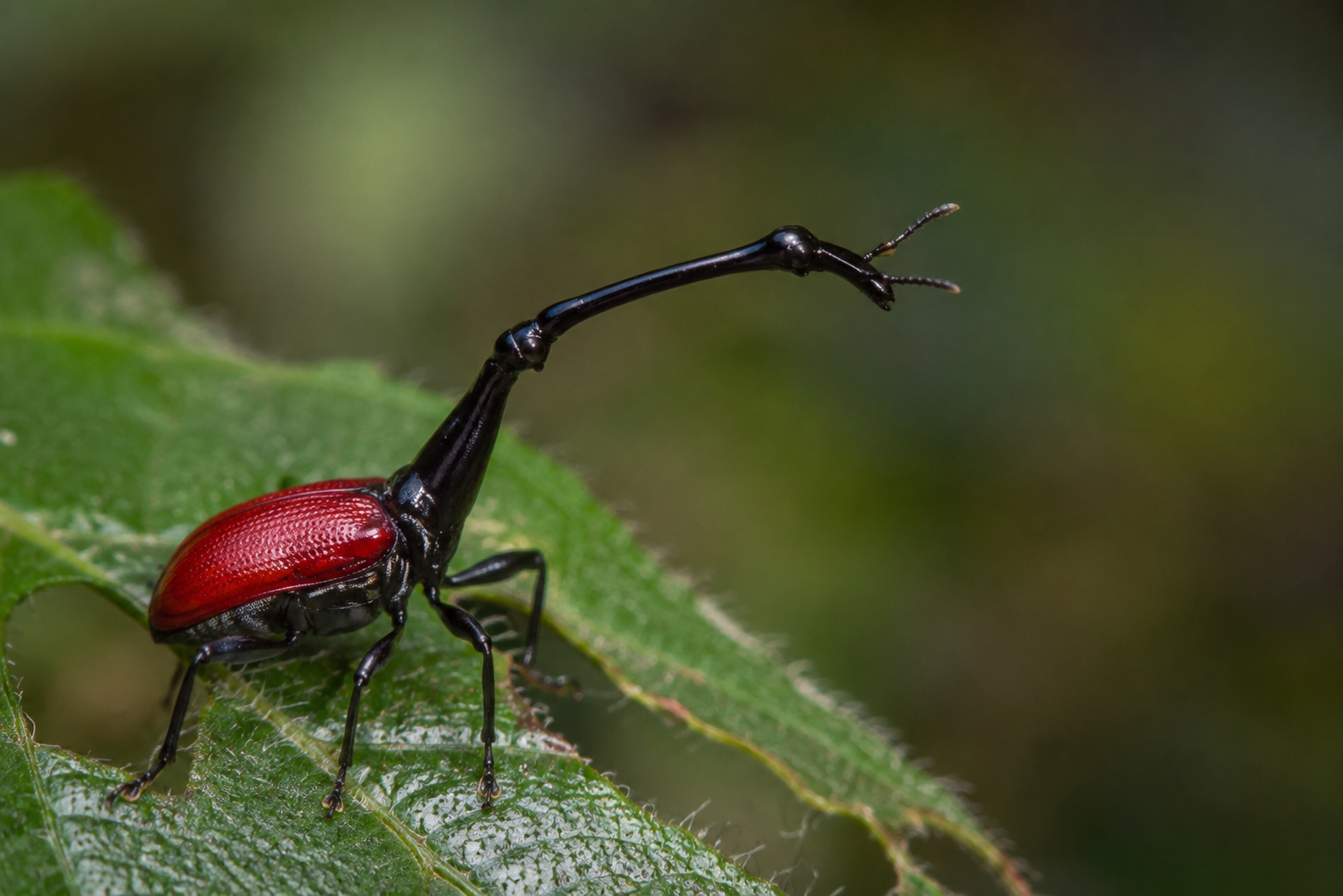
The Giraffe Weevil (Trachelophorus giraffa) is a species of beetle in the family Attelabidae. It is endemic to Madagascar and is known for its distinctive elongated neck, which is reminiscent of a giraffe.
Physical Characteristics
The Giraffe Weevil has a distinctive elongated neck, which is used for fighting between males. The neck is made up of three elongated thoracic segments, which are used to support the head. The weevil’s body is typically black or dark brown in color, with a distinctive red or orange stripe running along its back. The weevil’s elytra (wing covers) are also elongated, and are used to protect its wings.
| Characteristic | Description |
|---|---|
| Length | 2.5-3 cm (1-1.2 in) |
| Weight | 0.5-1 g (0.02-0.04 oz) |
| Body color | Black or dark brown with red or orange stripe |
| Neck length | Up to 1 cm (0.4 in) in males |
Habitat and Distribution
The Giraffe Weevil is endemic to Madagascar, where it is found in the island’s dry forests. The weevil is typically found on the leaves and stems of trees, where it feeds on plant sap.
Behavior
The Giraffe Weevil is a solitary animal, and is typically only found in the company of other weevils during mating. Males engage in a unique form of combat, using their elongated necks to fight each other for mating rights. The weevil’s neck is also used for defense, and is raised when the weevil is threatened.
Conservation Status
The Giraffe Weevil is listed as Near Threatened on the IUCN Red List, due to habitat loss and fragmentation. The weevil’s habitat is being destroyed due to deforestation and agriculture, which is reducing the weevil’s population.
Interesting Facts
The Giraffe Weevil’s elongated neck is made up of three thoracic segments, which are fused together. The weevil’s neck is also highly flexible, and can be bent and twisted in a variety of ways. The weevil’s unique neck has made it a popular subject for study among entomologists.
What is the Giraffe Weevil’s main source of food?
The Giraffe Weevil’s main source of food is plant sap, which it extracts from the leaves and stems of trees.
How does the Giraffe Weevil defend itself?
The Giraffe Weevil defends itself by raising its elongated neck when threatened. The neck is also used for combat between males.
Is the Giraffe Weevil endangered?
The Giraffe Weevil is listed as Near Threatened on the IUCN Red List, due to habitat loss and fragmentation.
What is unique about the Giraffe Weevil’s neck?
The Giraffe Weevil’s neck is made up of three thoracic segments, which are fused together. The neck is also highly flexible, and can be bent and twisted in a variety of ways.
- International Union for Conservation of Nature (IUCN). (2022). Trachelophorus giraffa.
- Madagascar National Parks. (n.d.). Giraffe Weevil.
- Wikipedia. (2022). Giraffe weevil.
Please note that the Giraffe Weevil is a wild animal and should not be handled or kept as a pet. It is also important to respect the weevil’s habitat and not to disturb or destroy its natural environment.
Life Cycle
The Giraffe Weevil undergoes a complete metamorphosis, with four distinct life stages: egg, larva, pupa, and adult. The female weevil lays her eggs on the leaves or stems of trees, typically in the spring or summer months. The eggs hatch into larvae after several weeks, and the larvae feed on plant sap and other soft tissues. As the larvae grow, they molt several times, eventually entering a pupal stage. During this stage, the larva transforms into a fully formed adult weevil, emerging from its pupal casing after several weeks. The adult weevil will then begin the cycle again, mating and laying eggs to start the next generation.
Communication
Giraffe Weevils communicate primarily through chemical signals, using pheromones to attract mates and deter rivals. Males will also engage in a form of visual communication, using their elongated necks to intimidate rivals and attract females. During courtship, males will also vibrate their bodies and make a hissing sound to signal their interest to females.
Senses
Giraffe Weevils have a highly developed sense of smell, which they use to locate food sources and detect potential mates. They also have compound eyes that are sensitive to movement and changes in light, allowing them to detect predators and navigate their environment. The weevils’ sense of touch is also highly developed, allowing them to detect subtle vibrations and textures.
Seasonal Variation
Giraffe Weevils are active throughout the year, but their activity levels may vary depending on the season. During the dry season, the weevils may be more active at night, when the temperature is cooler and the humidity is higher. During the wet season, the weevils may be more active during the day, when the temperature is warmer and the humidity is lower.
Ecological Relationships
Giraffe Weevils play an important role in their ecosystem, serving as both predators and prey. They feed on plant sap and other soft tissues, helping to regulate the growth of trees and other vegetation. They are also an important food source for other animals, such as birds and small mammals.
Research
Scientists are still learning about the Giraffe Weevil and its habits. Research has focused on the weevil’s unique neck structure, which is thought to be an adaptation for fighting between males. Studies have also explored the weevil’s diet and feeding habits, as well as its role in the ecosystem.
Responsible Enrichment
Giraffe Weevils can make interesting and educational pets, but they require specialized care and housing. Owners should provide a large, escape-proof enclosure with plenty of hiding places and visual stimulation. A diet of fresh leaves and stems should be provided, as well as a source of water. Owners should also be aware of the weevil’s unique neck structure and take steps to prevent injury.
Ethical and Legal Considerations
Giraffe Weevils are protected by law in Madagascar, and their collection and export are regulated. Owners should ensure that they have obtained their weevils from a reputable and licensed dealer, and should be aware of any local laws and regulations regarding the keeping of exotic pets.
Reproduction and Development
The Giraffe Weevil’s reproductive cycle is complex and involves a series of intricate behaviors. Males engage in intense battles for dominance, using their elongated necks to fight for mating rights. The winner of these battles will then mate with a female, who will lay her eggs on the leaves of a host plant. The eggs will hatch into larvae, which will feed on the plant’s sap before pupating and emerging as adult weevils.
The development of the Giraffe Weevil is also closely tied to its host plant. The larvae will feed on the plant’s sap, using their specialized mouthparts to tap into the plant’s vascular system. As the larvae grow, they will molt several times, eventually pupating and emerging as adult weevils. The adult weevils will then begin the cycle again, mating and laying eggs on new host plants.
Diet and Foraging
The Giraffe Weevil is a herbivore, feeding on the sap of various plant species. The weevil’s diet consists mainly of plant sap, which it extracts using its specialized mouthparts. The weevil’s favorite host plants are typically trees and shrubs, which provide a rich source of sap.
The Giraffe Weevil’s foraging behavior is also closely tied to its host plant. The weevil will use its sense of smell to locate a suitable host plant, and then use its mouthparts to tap into the plant’s vascular system. The weevil will feed on the plant’s sap for several hours, eventually moving on to a new host plant.
Defenses and Predators
The Giraffe Weevil has several defenses against predators, including its distinctive elongated neck and its ability to release a foul-tasting fluid from its body. The weevil’s neck is also highly flexible, allowing it to move quickly and avoid predators.
Despite these defenses, the Giraffe Weevil still has several predators, including birds, spiders, and other insects. The weevil’s main predators are typically birds, which feed on the weevil’s eggs and larvae. Spiders and other insects also prey on the Giraffe Weevil, using their webs and venom to capture and kill the weevil.
Cultural Significance
The Giraffe Weevil has significant cultural and economic importance in Madagascar. The weevil is considered a delicacy in some parts of the island, and is often served fried or boiled. The weevil’s distinctive elongated neck also makes it a popular subject in local art and folklore.
The Giraffe Weevil is also an important part of Madagascar’s ecosystem, playing a crucial role in the pollination and dispersal of plant seeds. The weevil’s feeding behavior also helps to regulate the growth of its host plants, preventing any one species from dominating the ecosystem.
Interesting Behaviors
The Giraffe Weevil has several interesting behaviors, including its unique mating rituals and its ability to play dead. The weevil’s mating rituals involve a complex series of dances and displays, which are used to attract a mate.
The weevil’s ability to play dead is also a unique behavior, which is used to avoid predators. When threatened, the weevil will fall to the ground and remain still, pretending to be dead. This behavior is often successful, as predators will typically avoid dead insects.