Classification and Distribution
The Atlas Beetle (Chalcosoma atlas) is a species of beetle in the family Scarabaeidae. It is one of the largest beetles in the world and is found in the tropical forests of Asia, including India, China, and Southeast Asia.
Physical Characteristics
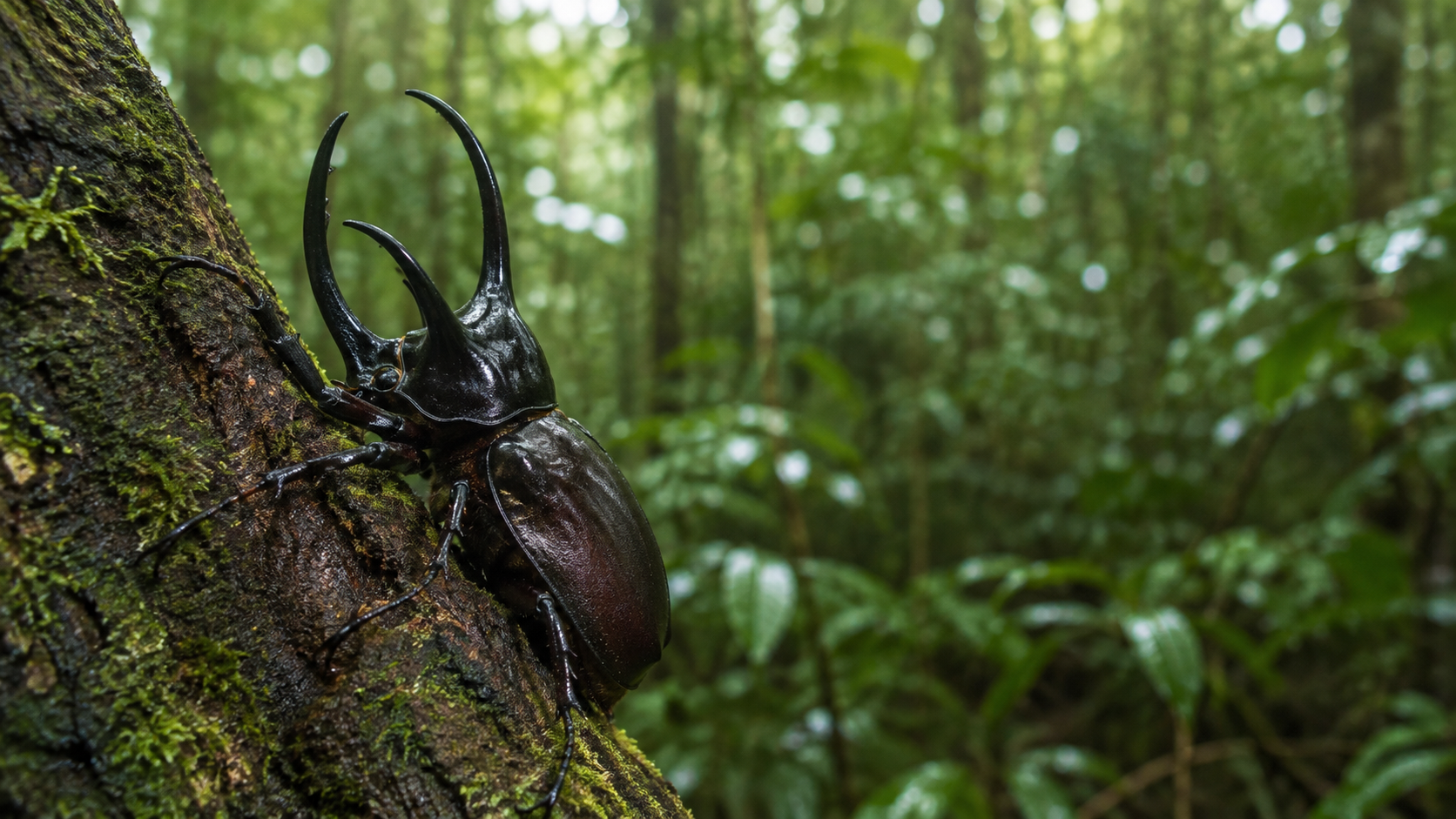
The Atlas Beetle is a large insect, with some specimens reaching lengths of up to 13 cm (5.1 in) and weighing up to 45 grams (1.6 oz). It has a distinctive horn on its head, which is used for fighting and defense. The beetle’s body is black with a metallic sheen, and it has a distinctive pattern of white or yellow markings on its elytra.
| Scientific Name | Common Name | Family | Distribution |
|---|---|---|---|
| Chalcosoma atlas | Atlas Beetle | Scarabaeidae | Asia |
Natural History
The Atlas Beetle is a nocturnal insect that is found in tropical forests. It is a herbivore and feeds on the sap of trees. The beetle is also known to feed on fruit and other plant material.
Behavior
The Atlas Beetle is a solitary insect and is only found in large numbers during the mating season. The male beetle uses its horn to fight with other males for mating rights. The female beetle lays her eggs in the soil, and the larvae feed on the roots of trees.
Conservation Status
The Atlas Beetle is not considered to be a threatened species, although its habitat is under threat from deforestation and urbanization.
Interesting Facts
The Atlas Beetle is considered to be one of the largest beetles in the world. It is also one of the most distinctive, with its large horn and metallic sheen.
What is the average lifespan of an Atlas Beetle?
The average lifespan of an Atlas Beetle is 2-3 years.
What is the main source of food for the Atlas Beetle?
The main source of food for the Atlas Beetle is the sap of trees.
Is the Atlas Beetle a threatened species?
No, the Atlas Beetle is not considered to be a threatened species.
How large can the Atlas Beetle grow?
The Atlas Beetle can grow up to 13 cm (5.1 in) in length.
- International Union for Conservation of Nature (IUCN)
- World Wildlife Fund (WWF)
- Encyclopedia Britannica
This article is for informational purposes only and should not be considered as advice for keeping the Atlas Beetle as a pet. The Atlas Beetle is a wild animal and should be treated with respect and caution. It is not recommended to handle or keep the Atlas Beetle in captivity.
Life Cycle
The life cycle of the Atlas Beetle consists of four stages: egg, larva, pupa, and adult. The female beetle lays her eggs in the soil, and the larvae that hatch from these eggs feed on the roots of trees. The larvae go through several instars, molting their skin as they grow. After several months, the larvae pupate and transform into adult beetles. The adult beetles emerge from the soil and begin the next generation. The life cycle of the Atlas Beetle can take several years to complete, depending on factors such as food availability and climate.
Communication and Senses
The Atlas Beetle uses a variety of methods to communicate with other beetles. Males use their horns to fight with each other for mating rights, and they also use pheromones to attract females. The beetles have compound eyes that are sensitive to movement and changes in light, which helps them to detect potential predators. They also have a highly developed sense of smell, which they use to locate food and potential mates.
Seasonal Variation
The Atlas Beetle is active throughout the year, but its activity levels vary depending on the season. During the wet season, the beetles are more active and can be found in large numbers. During the dry season, the beetles are less active and may burrow into the soil to escape the dry conditions. The beetles also undergo a period of dormancy during the dry season, which helps them to conserve energy.
Ecological Relationships
The Atlas Beetle plays an important role in the ecosystem as a herbivore and a decomposer. The beetles help to break down plant material and recycle nutrients, which benefits other animals in the ecosystem. The beetles are also an important food source for other animals, such as birds and small mammals.
Research
The Atlas Beetle has been the subject of several research studies, particularly in the fields of entomology and ecology. Researchers have studied the beetle’s behavior, ecology, and life cycle, and have also investigated its potential as a biological control agent. The beetle’s horn has also been studied in detail, and researchers have discovered that it is made of a hard, chitinous material that is similar to the material found in the exoskeletons of other insects.
Responsible Enrichment
The Atlas Beetle is a popular insect among collectors and hobbyists, but it is also an important part of the ecosystem. As such, it is essential to handle the beetles with care and to ensure that their capture and trade do not harm the environment. Responsible enrichment practices, such as providing a suitable enclosure and diet, can help to ensure the well-being of the beetles and promote their conservation.
Ethical and Legal Considerations
The Atlas Beetle is protected by laws and regulations in several countries, and its capture and trade are subject to certain restrictions. It is essential to ensure that any activities involving the beetle are carried out in accordance with local laws and regulations, and that the beetle’s welfare is prioritized. Additionally, it is essential to promote sustainable and responsible practices in the capture and trade of the beetle, in order to ensure its conservation and the protection of the ecosystem.
Habitat and Environmental Adaptations
The Atlas Beetle inhabits the tropical forests of Asia, where it can be found in a variety of habitats, including primary and secondary forests, as well as forest edges and clearings. The beetle is well adapted to its environment, with a number of specialized features that enable it to survive and thrive in this ecosystem. For example, its large size and powerful horn allow it to defend itself against predators, while its metallic sheen and distinctive markings may serve as a warning to potential threats.
In addition to its physical adaptations, the Atlas Beetle has also developed a number of behavioral adaptations that enable it to cope with its environment. For example, the beetle is nocturnal, which allows it to avoid the heat of the day and reduce its water loss. It is also a skilled climber, and can often be found on the trunks and branches of trees, where it feeds on sap and other plant material.
Diet and Foraging
The Atlas Beetle is a herbivore, and its diet consists mainly of the sap of trees. The beetle uses its long, tube-like mouthpart to pierce the bark of trees and feed on the sap, which is rich in nutrients. In addition to sap, the beetle also feeds on fruit and other plant material, including leaves and flowers.
The Atlas Beetle’s diet is thought to play an important role in its ecological relationships with other organisms in its ecosystem. For example, the beetle’s feeding activities may help to disperse seeds and promote the growth of new plants. The beetle’s diet may also influence the composition of its gut microbiome, which is thought to play a key role in its overall health and well-being.
Reproduction and Development
The Atlas Beetle’s reproductive biology is not well understood, but it is thought to be similar to that of other scarab beetles. The male beetle uses its horn to fight with other males for mating rights, and the female beetle lays her eggs in a protected location, such as under a layer of leaf litter or in a burrow.
The eggs hatch into larvae, which feed on plant material and grow and develop over several weeks or months. The larvae eventually pupate, and the adult beetles emerge after a period of several weeks or months. The adult beetles are thought to live for several months, during which time they feed, mate, and reproduce.
Cultural Significance
The Atlas Beetle has a number of cultural and economic significance in the regions where it is found. In some cultures, the beetle is considered a delicacy and is eaten roasted or fried. In other cultures, the beetle is used in traditional medicine, where it is believed to have a number of health benefits.
The Atlas Beetle is also an important part of the ecosystem, playing a key role in seed dispersal and nutrient cycling. The beetle’s distinctive horn and metallic sheen also make it a popular species among collectors and enthusiasts.
Threats and Challenges
The Atlas Beetle is facing a number of threats and challenges in the wild, including habitat loss and fragmentation, as well as the impact of climate change. The beetle’s habitat is being cleared for agriculture and urban development, which is reducing the availability of food and shelter for the beetle.
Climate change is also thought to be affecting the beetle’s life cycle and behavior, as changes in temperature and precipitation patterns alter the availability of food and other resources. The beetle’s population is also being impacted by the introduction of non-native species, which are competing with the beetle for resources and habitat.